 简体中文
简体中文 繁體中文
繁體中文 English
 한국 사람
한국 사람 日本語
日本語 Deutsch
 русский
 بالعربية
 TÜRKÇE
 português
 คนไทย
คนไทย french

In the modern advertising and signage industry, material selection plays a critical role in determining the quality, appearance, durability, and production efficiency of finished products.
For LED channel letters, illuminated signs, light boxes, and commercial displays, three commonly used plastic materials are:
GPPS (General Purpose Polystyrene)
HIPS (High Impact Polystyrene)
Acrylic Sheet (PMMA)
Each material has unique characteristics. Understanding their differences helps sign manufacturers, advertising companies, and distributors select the most suitable solution for different applications.
Overview of GPPS, HIPS, and Acrylic Materials
What is GPPS Sheet?
GPPS is a transparent polystyrene sheet known for its excellent optical clarity, high gloss surface, and lightweight structure.
It is commonly used where transparency and visual appearance are important.
Main Advantages of GPPS:
High transparency
Excellent light transmission
Smooth glossy surface
Lightweight
Easy processing
Good printing performance
Cost-effective
Common Applications:
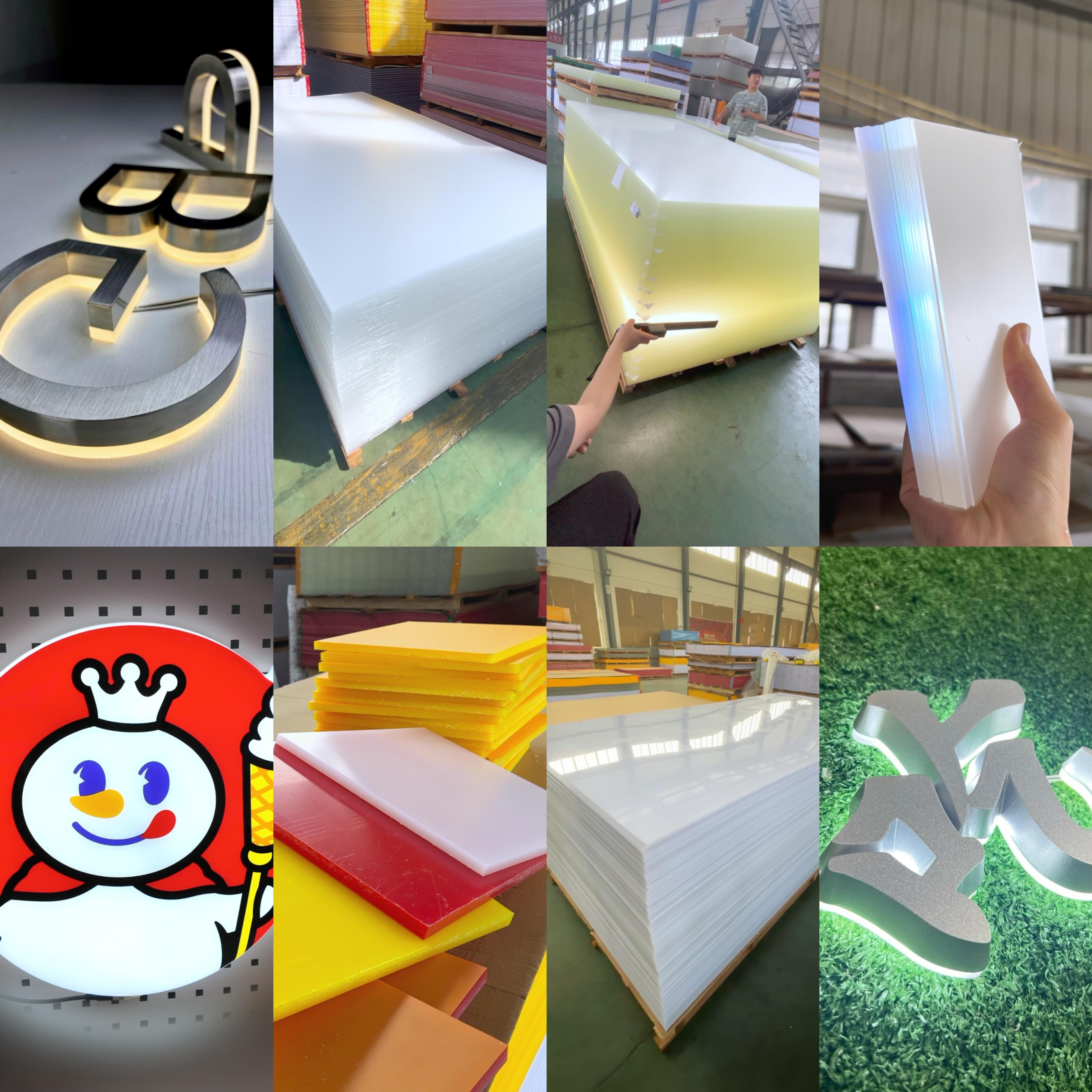
LED diffuser panels
Transparent signage
Display boards
Light guide components
Indoor advertising displays
What is HIPS Sheet?
HIPS (High Impact Polystyrene) is an impact-modified polystyrene material.
By adding rubber components, HIPS achieves significantly improved toughness and impact resistance compared with GPPS.
Main Advantages of HIPS:
Excellent impact resistance
High toughness
Easy vacuum forming
Good machining performance
Excellent printing surface
Strong bonding ability
Competitive price
Common Applications:
LED channel letter backing boards
Advertising signs
Vacuum formed letters
Light box structures
Display stands
Commercial signage
What is Acrylic Sheet?
Acrylic, also known as PMMA (Polymethyl Methacrylate), is a premium transparent plastic material widely used in high-end signage and architectural applications.
It is known for its excellent transparency, weather resistance, and optical performance.
Main Advantages of Acrylic:
Crystal-clear transparency
Excellent UV resistance
Superior outdoor durability
Premium appearance
Excellent color stability
High surface hardness
Common Applications:
Outdoor advertising signs
Premium brand signage
LED illuminated letters
Architectural decoration
Retail displays
GPPS vs HIPS vs Acrylic Comparison Table
| Property | GPPS | HIPS | Acrylic |
|---|---|---|---|
| Transparency | Excellent | Low | Excellent |
| Impact Resistance | Medium | Excellent | Medium |
| Outdoor Durability | Limited | Medium | Excellent |
| Surface Gloss | High | Medium | Very High |
| Vacuum Forming | Good | Excellent | Good |
| CNC Processing | Easy | Easy | Easy |
| Printing Performance | Excellent | Excellent | Excellent |
| Weight | Light | Light | Medium |
| Cost | Low | Medium | Higher |
| Application Level | Economic | Practical | Premium |
Which Material is Best for LED Channel Letters?
The best material depends on the structure and requirements of the signage project.
HIPS: Best Choice for Channel Letter Backboards
For most LED channel letter manufacturers, HIPS is the preferred option because:
Strong Mechanical Performance
HIPS provides excellent strength and durability, helping maintain the shape of letters during production and installation.
Better Forming Performance
HIPS can easily be vacuum formed into:
3D letters
Curved shapes
Customized designs
Complex advertising structures
Cost Efficiency
Compared with acrylic, HIPS provides a better balance between:
Performance
Processing efficiency
Material cost
This makes it ideal for large-volume signage production.
GPPS: Best Choice for Light Diffusion Applications
GPPS is widely selected when light transmission is the priority.
Typical applications include:
LED light diffusion panels
Transparent advertising covers
Indoor illuminated displays
Its excellent transparency helps achieve brighter and more uniform lighting effects.
Acrylic: Best Choice for Premium Outdoor Signs
Acrylic remains the preferred material for high-end signage projects requiring:
Long-term outdoor exposure
Premium appearance
Excellent weather resistance
High optical clarity
Typical applications:
Luxury brand stores
Shopping mall signs
Architectural projects
Outdoor illuminated signs
Why Many Sign Factories Choose HIPS Instead of Acrylic?
Although acrylic offers premium performance, HIPS has become increasingly popular in commercial signage manufacturing.
The reasons include:
1. Lower Production Cost
For large quantities of advertising projects, material cost is an important factor.
HIPS provides excellent performance while reducing manufacturing expenses.
2. Easier Processing
HIPS is easier to:
Cut
Drill
Engrave
Vacuum form
Assemble
This helps manufacturers improve production efficiency.
3. Reduced Breakage Risk
Compared with acrylic, HIPS has better impact resistance.
During:
Transportation
Storage
Installation
HIPS reduces the risk of cracking and damage.
4. Suitable for Mass Production
For:
Chain stores
Shopping malls
Franchise signage
Advertising contractors
HIPS provides a reliable and economical solution.
How to Select the Right Plastic Sheet for Your Project?
Before choosing GPPS, HIPS, or Acrylic, consider the following factors:
1. Application Environment
Indoor Projects:
Recommended:
GPPS
HIPS
Examples:
Indoor signs
Exhibition displays
Retail displays
Outdoor Projects:
Recommended:
Acrylic
UV-resistant HIPS
Examples:
Building signs
Outdoor advertising boards
Commercial storefront signs
2. Processing Requirements
If your project requires:
Vacuum Forming:
Choose:
HIPS
High Transparency:
Choose:
GPPS / Acrylic
CNC Cutting:
Choose:
GPPS / HIPS / Acrylic
3. Budget Requirements
Economy Solution:
Choose:
GPPS
Balanced Performance Solution:
Choose:
HIPS
Premium Solution:
Choose:
Acrylic
Future Trends of Advertising Plastic Materials
The signage industry is moving toward more sustainable, efficient, and customized materials.
Future trends include:
Recycled plastic sheets
Low-carbon manufacturing
UV-resistant materials
Fire-retardant sheets
Customized colors
Smart manufacturing compatibility
Eco-friendly advertising solutions
Manufacturers are continuously improving plastic sheet technology to meet global signage requirements.
Conclusion
GPPS, HIPS, and Acrylic each play an important role in modern advertising and signage manufacturing.
GPPS is ideal for transparent, lightweight, and cost-effective applications.
HIPS provides the best balance of impact resistance, processing performance, and cost efficiency.
Acrylic delivers premium appearance and excellent outdoor durability.
For LED channel letters, advertising signs, and commercial displays, selecting the right material can significantly improve product quality, manufacturing efficiency, and customer satisfaction.
As a professional signage material supplier, providing high-quality GPPS and HIPS sheets helps advertising manufacturers create durable, attractive, and cost-effective visual communication solutions.